Why did I choose OM System? What type of photography do I specialize in?
The bulk of my photography is centered on wildlife (mainly birds) and macro. I absolutely love capturing images of birds and insects in flight. I also enjoy travel, landscape and floral photography. Other than people and astrophotography, I will photograph virtually anything that catches my eye. My approach to photography is very experimental and experiential. As a dedicated handheld photographer, I love to push myself and my camera gear hard, to see what can be achieved.
I chose OM/Olympus for a combination of factors which included comfort/handling/ergonomics, computational photography technologies like Pro Capture, Bird AI, Live ND, Handheld Hi Res, handheld HDR, and in-camera focus stacking. Other important factors were IBIS performance, outstanding optical performance of M.Zuiko lenses, excellent equipment build quality, and industry leading weather sealing.
In short, I was looking for a photographic system that would allow me to significantly expand my photographic potential with ‘go anywhere, shoot anything’ flexibility, combined with leading edge technologies.
Preferred camera kit for bird photography:
I shoot with a pair of OM-D E-M1X camera bodies, which are simply superb pieces of kit (see my long term review of this camera). My ‘go to’ lens for bird photography is the M.Zuiko 150-600 mm f/5-6.3 IS. I love the in-field flexibility, image quality, and the outstanding handling of this lens (see my review of this lens). Key accessories include the M.Zuiko MC-14 and MC-20 teleconverters. I typically have a short, collapsible stool with me. I use Pro Capture L or H for all of my birds-in-motion images.
Depending on travel considerations I also use the M.Zuiko 100-400 mm f/5-6.3 IS, M.Zuiko PRO 40-150 mm f/2.8 (usually with teleconverters), and the 75-300 f/4.8-6.7 II as required.
Link to Handheld Bird Photography eBook:
https://smallsensorphotography.com/handheld-bird-photography-ebook
Link to website:
https://smallsensorphotography.com/
Links to key articles/galleries:
The benefits of using S-AF with Pro Capture H:
https://smallsensorphotography.com/overreliance-on-c-af
Hands-On Review of M.Zuiko 150-600:
https://smallsensorphotography.com/m-zuiko-150-600-hands-on-review
Long term review of OM-D E-M1X:
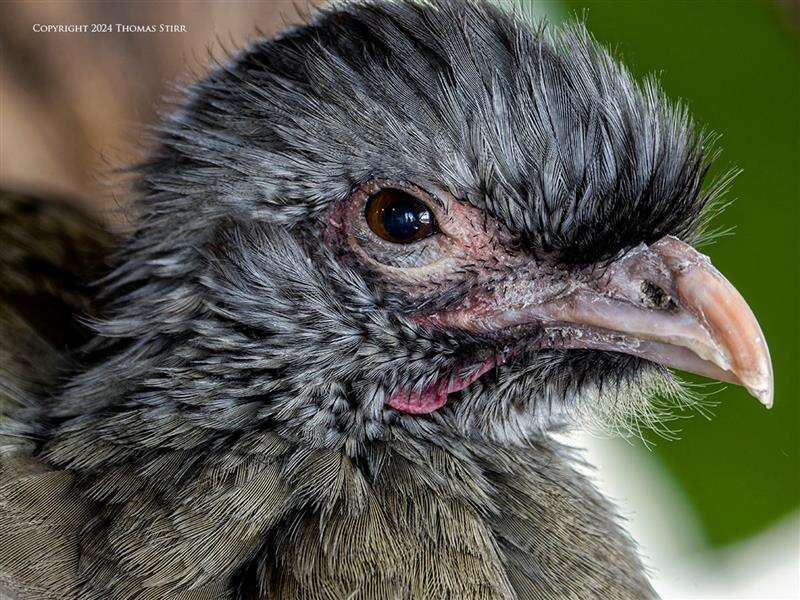
This image was captured with the M.Zuiko 150-600 mm f/5-6.3 IS fully extended to 600 mm (equivalent field-of-view 1200 mm) and with the lens shot wide open at f/6.3, at one of Bird Kingdom’s indoor aviaries in Niagara Falls, Canada.
This was a handheld test image created at 1/13th of a second for one of my website articles to illustrate the incredible IBIS performance of the E-M1X when combined with the Sync-IS of the M.Zuiko 150-600 mm f/5-6.3 IS zoom lens.
The image also demonstrates the sharpness and color rendition of the M.Zuiko 150-600 when shot wide open at f/6.3, at full 600 mm extension. When photographing wild birds, I have no hesitation shooting at shutter speeds as slow as 1/30 with the M.Zuiko 150-600 fully extended to 600 mm. It is my favorite lens for bird photography.

This image of a Baltimore oriole was captured through my kitchen window late in the afternoon. The bird had just bathed in a fishpond that I built in my backyard many years ago. It is about 5 meters away from our kitchen window. My wife and I keep the pond running 7/24 all year long so area birds and those that migrate through can have a spot to bathe and to get a drink.
The photograph was captured handheld at ISO-6400 with the M.Zuiko 100-400 mm f/5-6.3 IS using Bird Detection AI. I never hesitate to shoot using ISO values up to ISO-6400 with my OM/Olympus gear and will sometimes go beyond this ISO threshold depending on lighting and the nature of the photographic opportunity.
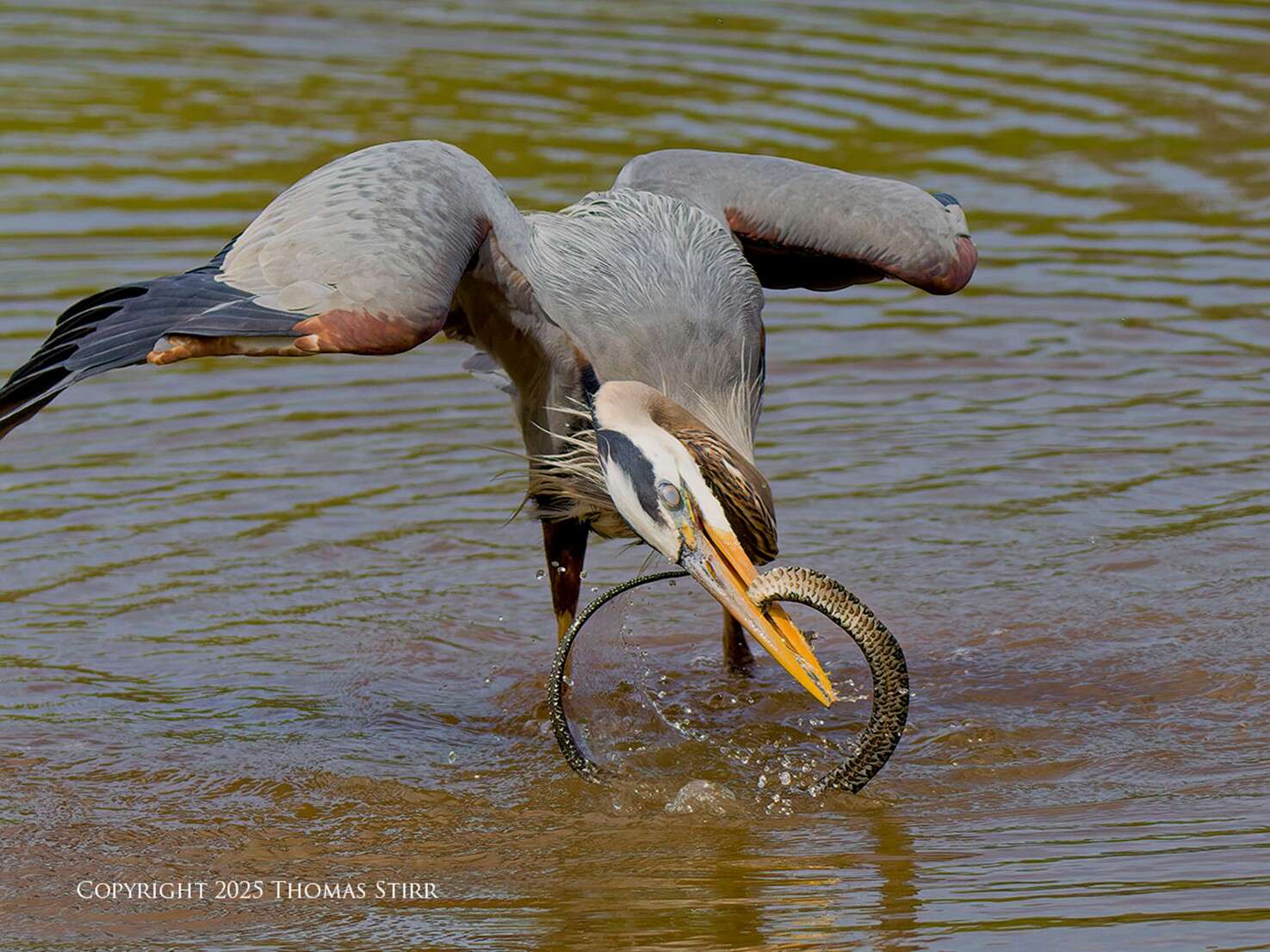
This action image captured a Great Blue Heron catching a water snake at Grindstone Creek in Burlington Ontario. This image was captured under very harsh mid-day light long after most photographers had headed off home. I used the M.Zuiko 150-600 mm f/5-6.3 IS lens with a combination of Pro Capture L (at 18 frames-per-second) and Bird Detection AI. It took the heron almost half an hour to subdue the snake enough so it could fly off to devour it. I was sitting on a short stool and positioned on a small concrete pier less than 12 meters from this action.
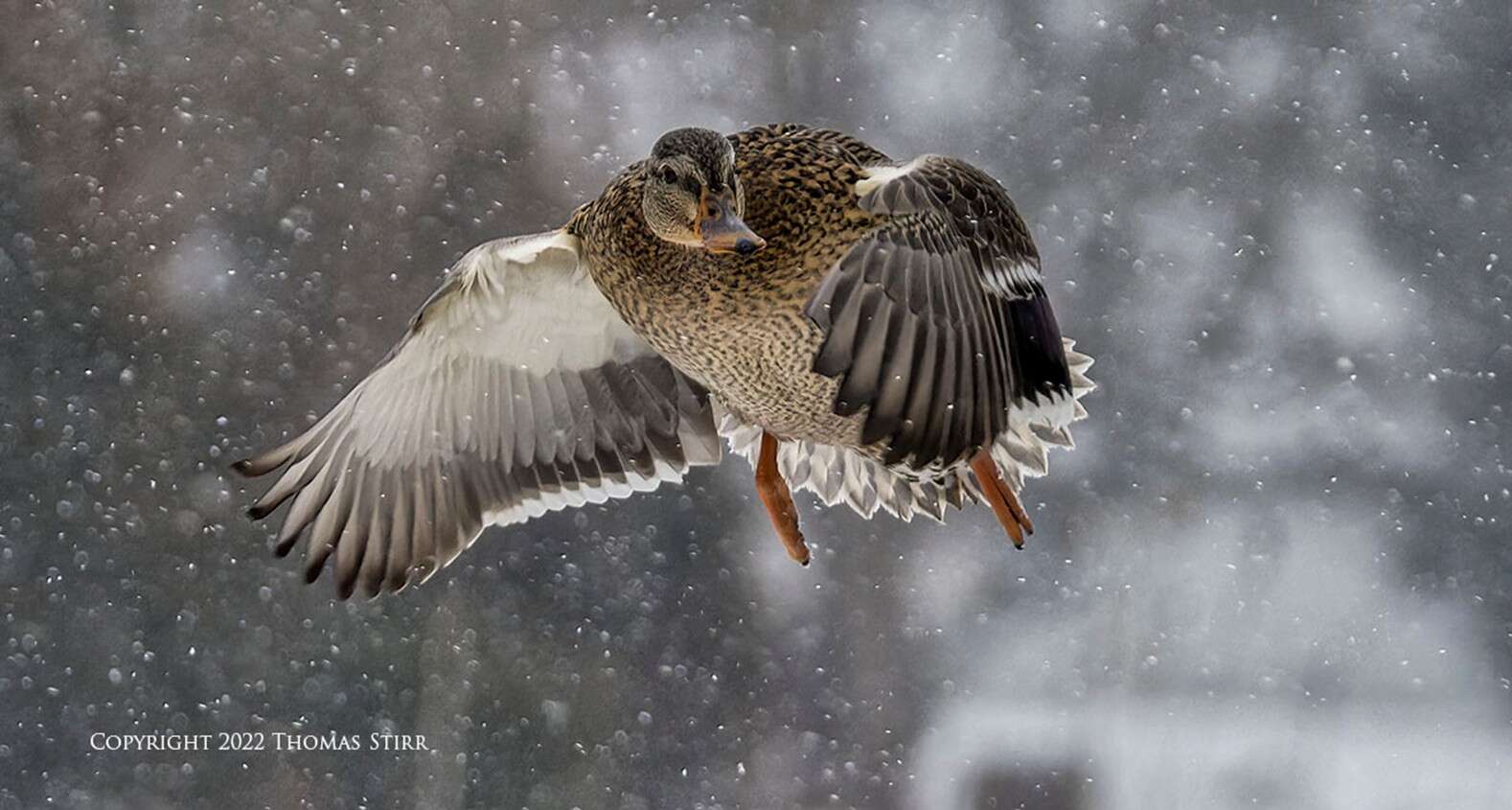
This image of a duck in flight was captured during a snowfall at a local harbour area. I used the M.Zuiko 100-400 mm f/5-6.3 with the M.Zuiko MC-14 teleconverter. A combination of Pro Capture L @ 18 frames-per-second and Bird Detection AI Subject Tracking was used for this photograph. I always use this combination of Bird Detection AI and Pro Capture L to photograph birds in free flight. Like all of my photography, I always use a single, small auto-focus point. I never hesitate to use my OM/Olympus gear outside in inclement weather as the weather sealing is outstanding.
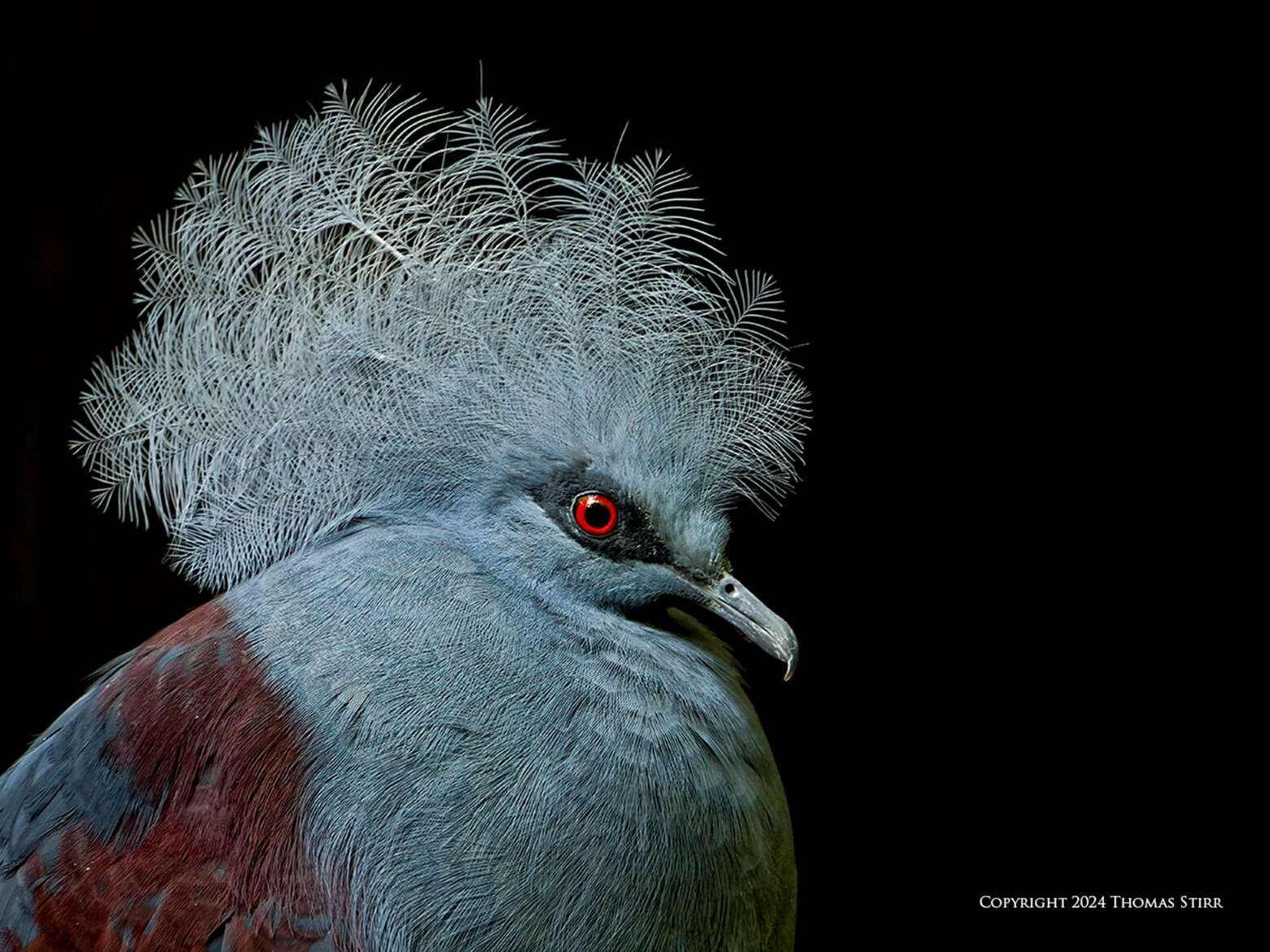
This test photograph of a crested pigeon was captured handheld in a very dark area in one of the indoor aviaries at Bird Kingdom in Niagara Falls Canada. I was doing some testing with my wife’s M.Zuiko 75-300 mm f/4.8-6.7 II zoom lens to determine if I could take it to New Zealand for some occasional bird photography that I was likely to do during a planned upcoming photography tour.
The M.Zuiko 75-300 mm II lens is unfairly maligned by some folks. I find the quality that is possible from this affordable lens to be quite good. The photograph above was shot handheld at 1/8 of a second with the lens fully extended to 300 mm (efov 600 mm) and shot wide open at f/6.7 using ISO-500.
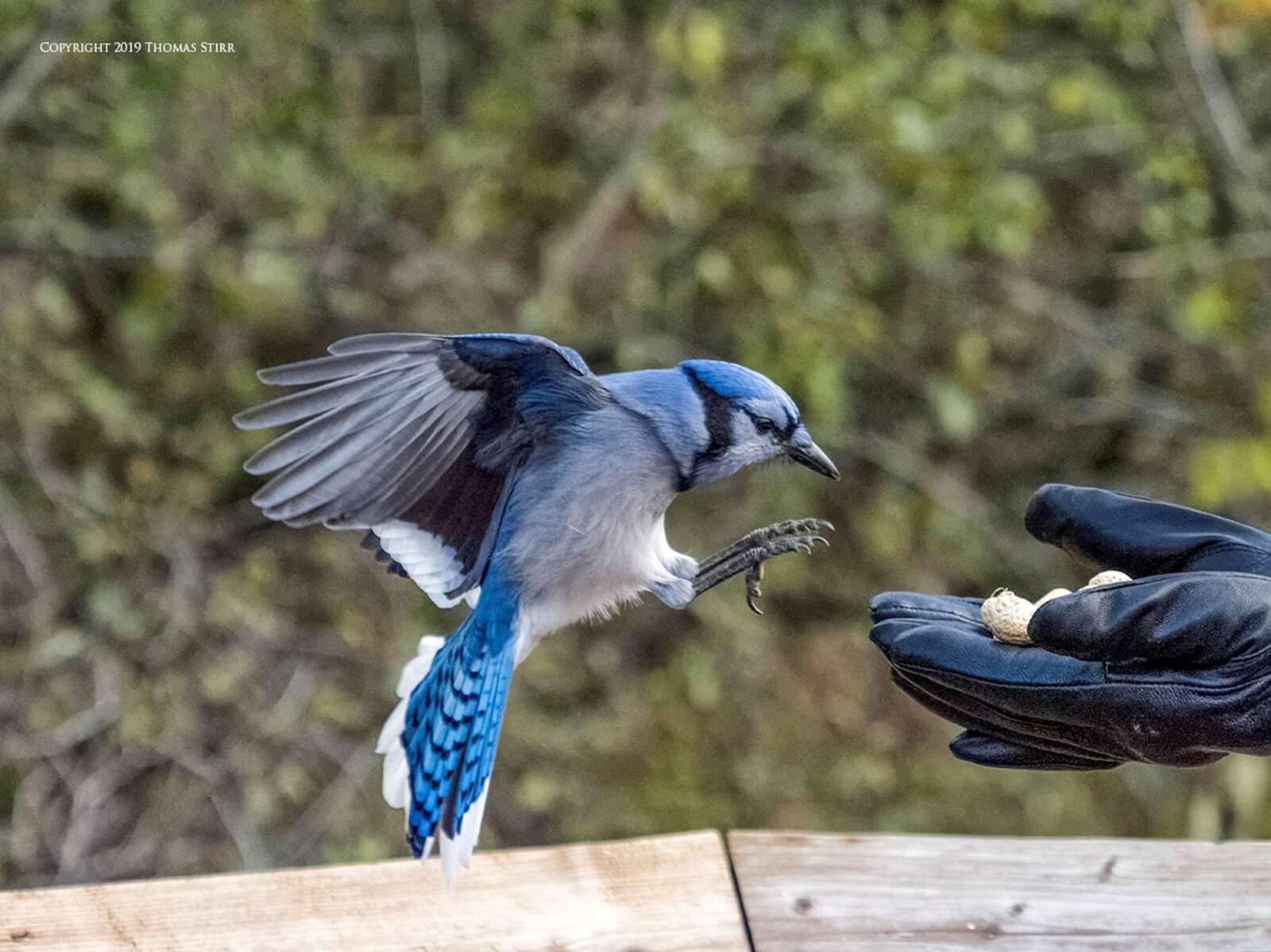
This image of a blue jay coming into land on a pair of outstretched gloved hands was captured with the M.Zuiko PRO 40-150 mm f/2.8 zoom fitted with the M.Zuiko MC-20 teleconverter. When I first changed over to the OM/Olympus system I used this combination for all of my bird photography. The photograph was captured at ISO-6400 using Pro Capture H and a single, small auto-focus point. A frame rate of 60 frames-per-second was used. Pre-Shutter Frames and Frame Limiter were both set to 15, which is my standard setting when using Pro Capture H.
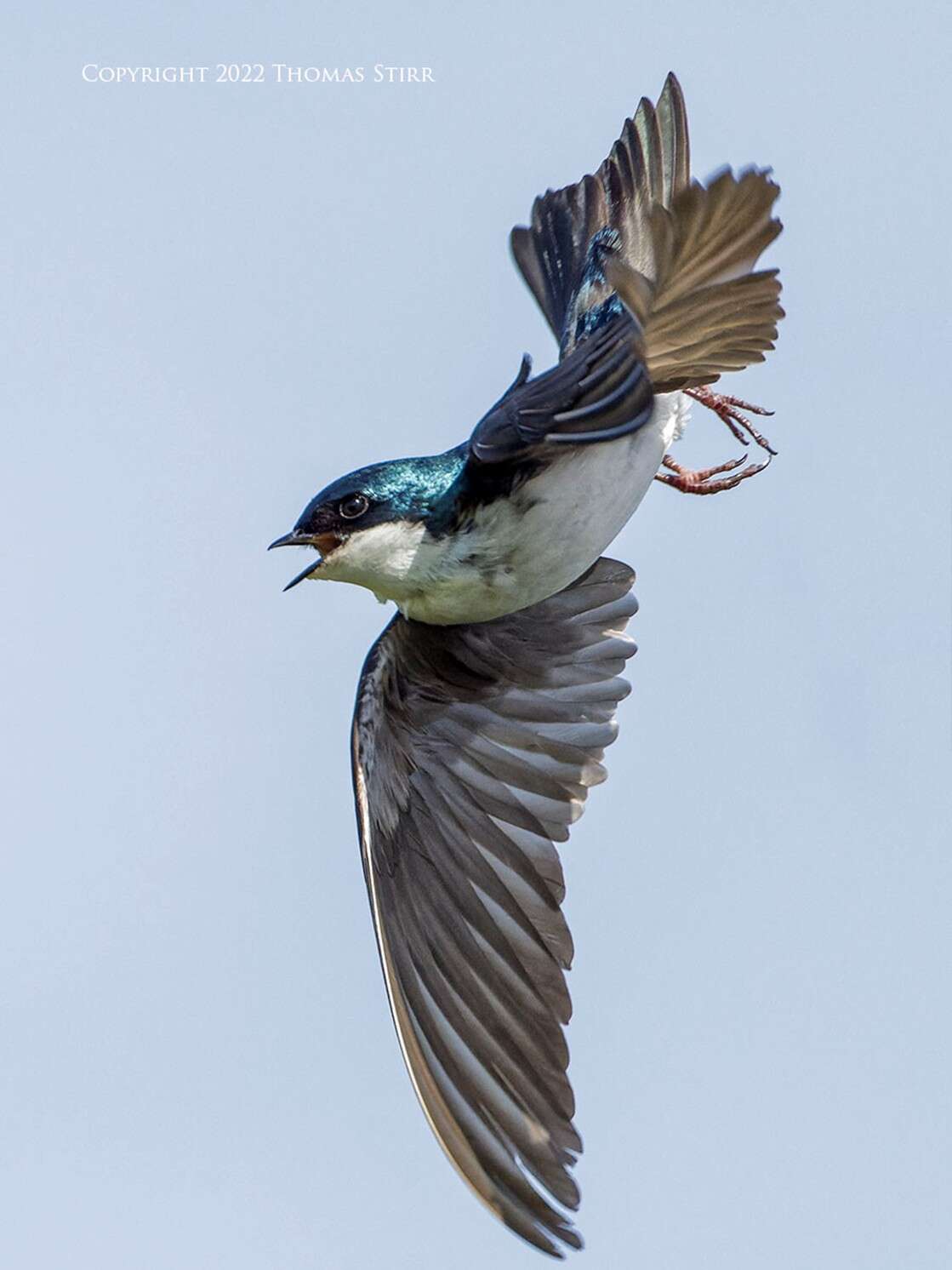
Appreciating that most of my website readers do not use an OM-D E-M1X, I sometimes use my wife’s camera body and telephoto lens for bird photography. This image of a tree swallow taking flight from a nesting box was captured with an OM-D E-M1 Mark III and the M.Zuiko 75-300 mm f/4.8-6.7 II zoom lens using Pro Capture H. A frame rate of 60 frames-per-second was used, with Pre-Shutter Frames and Frame Limiter both set to 15. This gives me one quarter second of shutter release timing, which suits my style of photography very well.
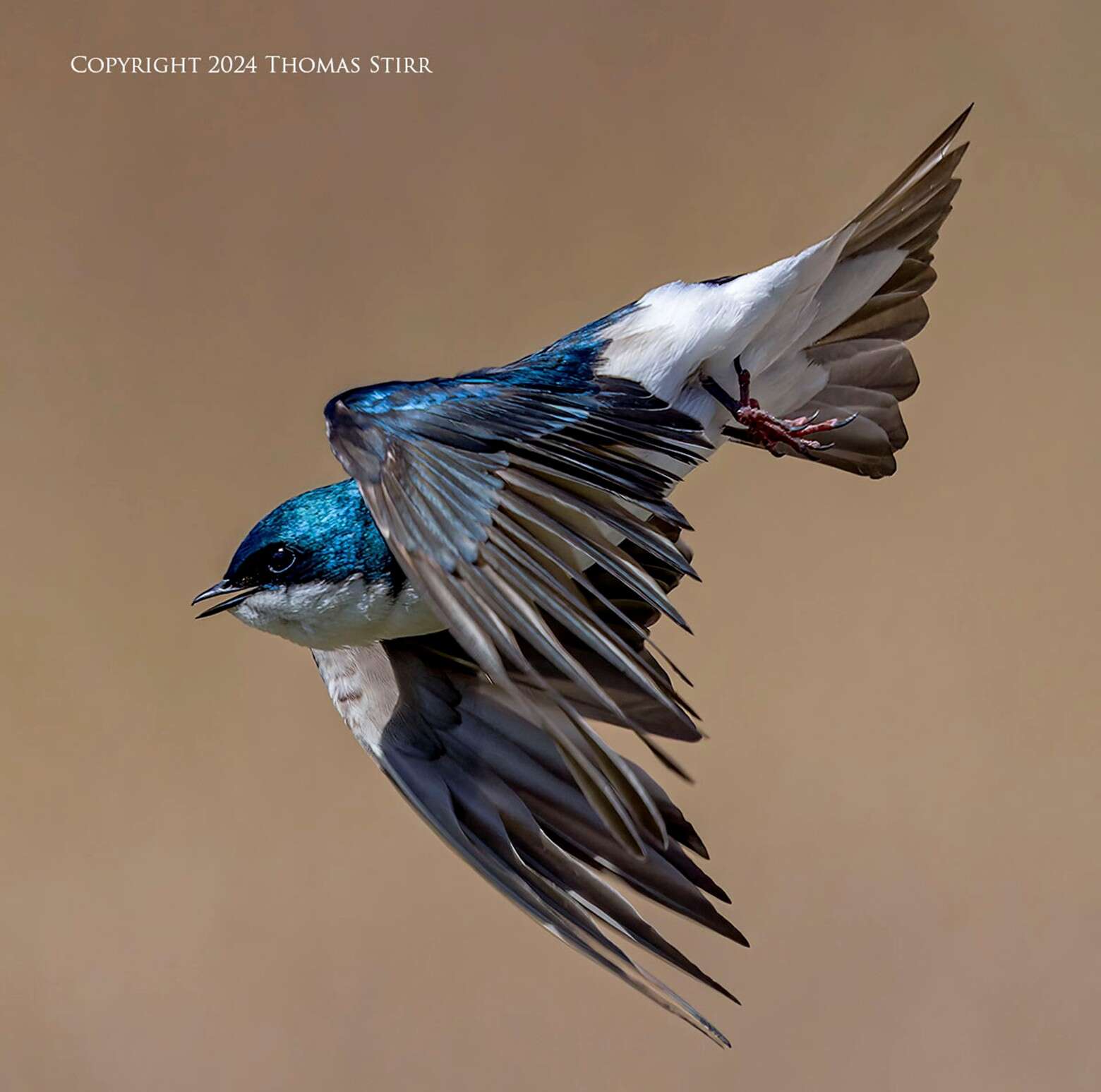
This image of a tree swallow taking flight from a nesting box was captured using an M.Zuiko 150-600 mm f/5-6.3 IS zoom lens with Pro Capture H, at 60 frames-per-second. Pre-Shutter Frames and Frame Limiter were both set to 15. A single, small AF point was used. The M.Zuiko 150-600 mm f/5-6.3 IS zoom is my favourite lens for bird photography. The added reach has expanded my photographic opportunities significantly, and the superb handling of this lens makes it a joy to use in the field.
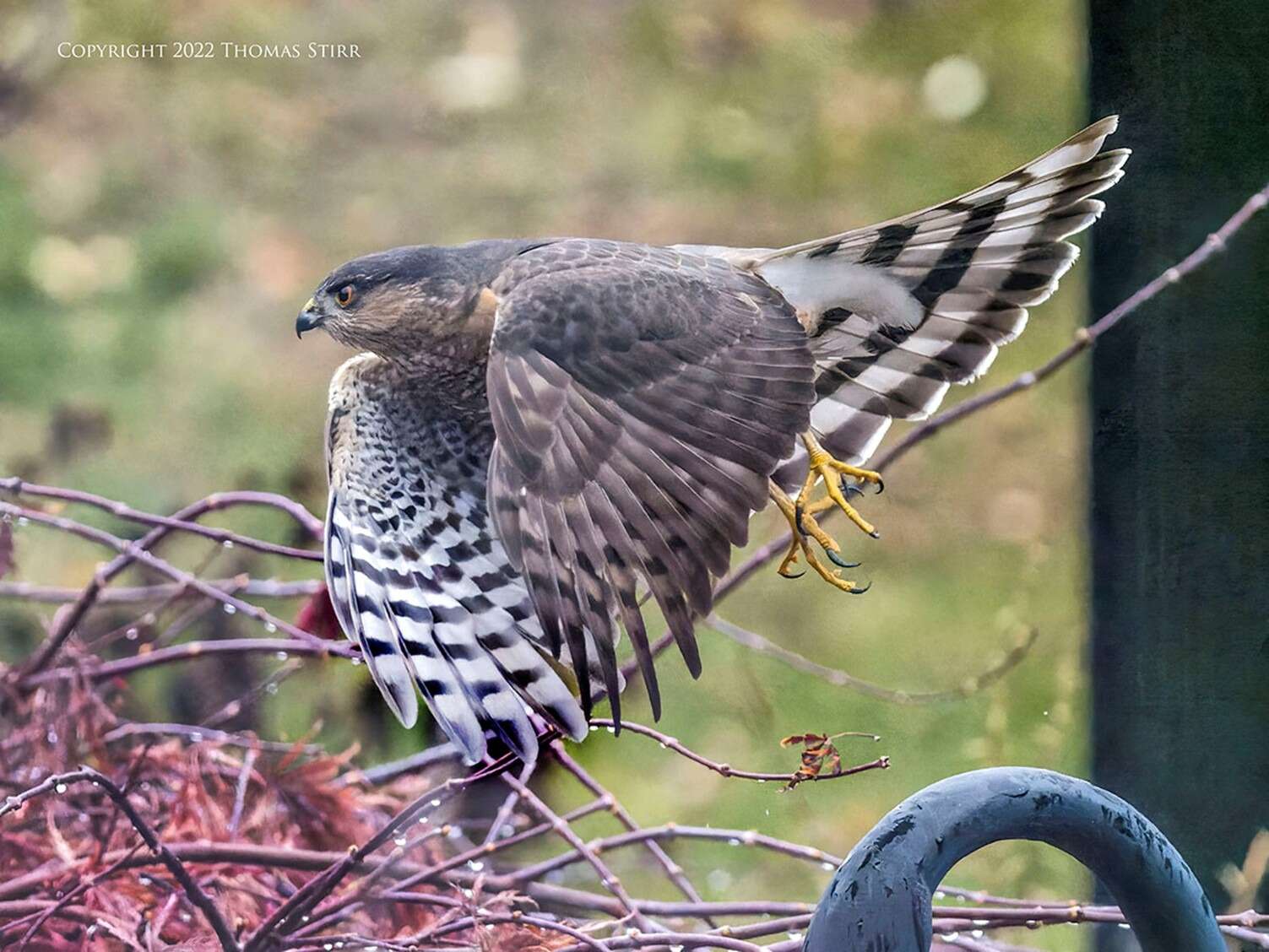
This image of a raptor taking flight was captured through my kitchen window late in the day. The raptor had been perched on a railing proximate to our backyard fish pond. I used the M.Zuiko 100-400 mm f/5-6.3 IS zoom lens and Pro Capture H, at 60 frames-per-second to capture this image. Pre-Shutter Frames and Frame Limiter were both set to 15. A single, small auto-focus point was used. This photograph was captured at ISO-16000. To help reduce potential noise I purposely overexposed this image (ETTR) then darkened the photograph in post. Using a fast frame rate increases my odds of capturing pleasing body and wing positions of birds taking flight.
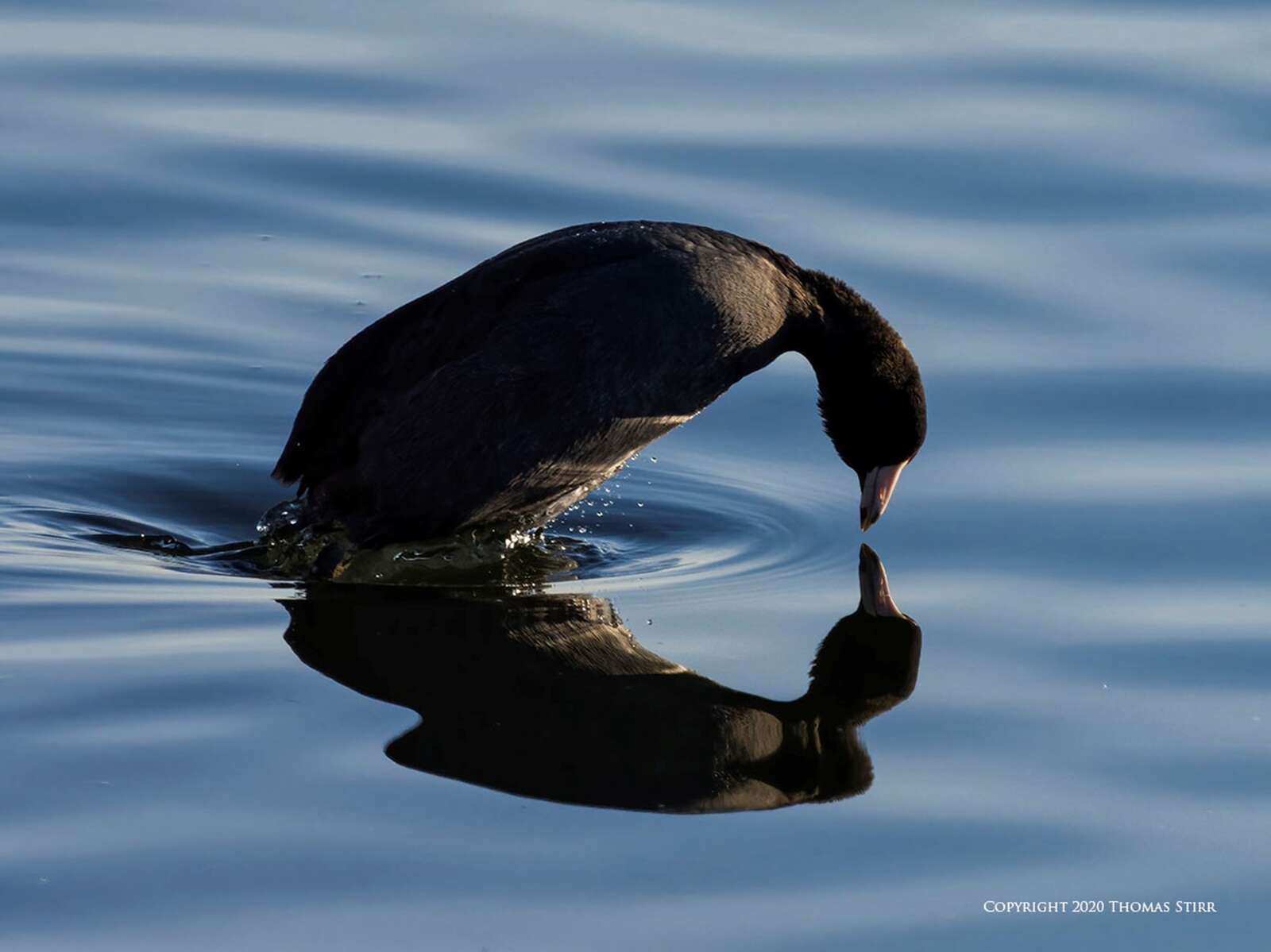
This photograph of an American coot diving to feed was captured handheld along the shoreline of Lake Ontario at LaSalle Park in Burlington. I had noticed the bird dive and return to the surface a couple of times. I quickly used the Custom Mode settings on my E-M1X to change my camera to my Pro Capture H settings. My plan was to capture an image of it in mid-dive just as its beak was about to touch the surface of the water. When the coot surfaced it was in a perfect position providing me with a profile composition. I began spooling images into temporary memory using Pro Capture H at 60 frames per second and fully depressed my shutter release as the bird’s head broke the surface of the water. One of the frames that had been spooling in temporary memory yielded the exact composition I had in my mind.
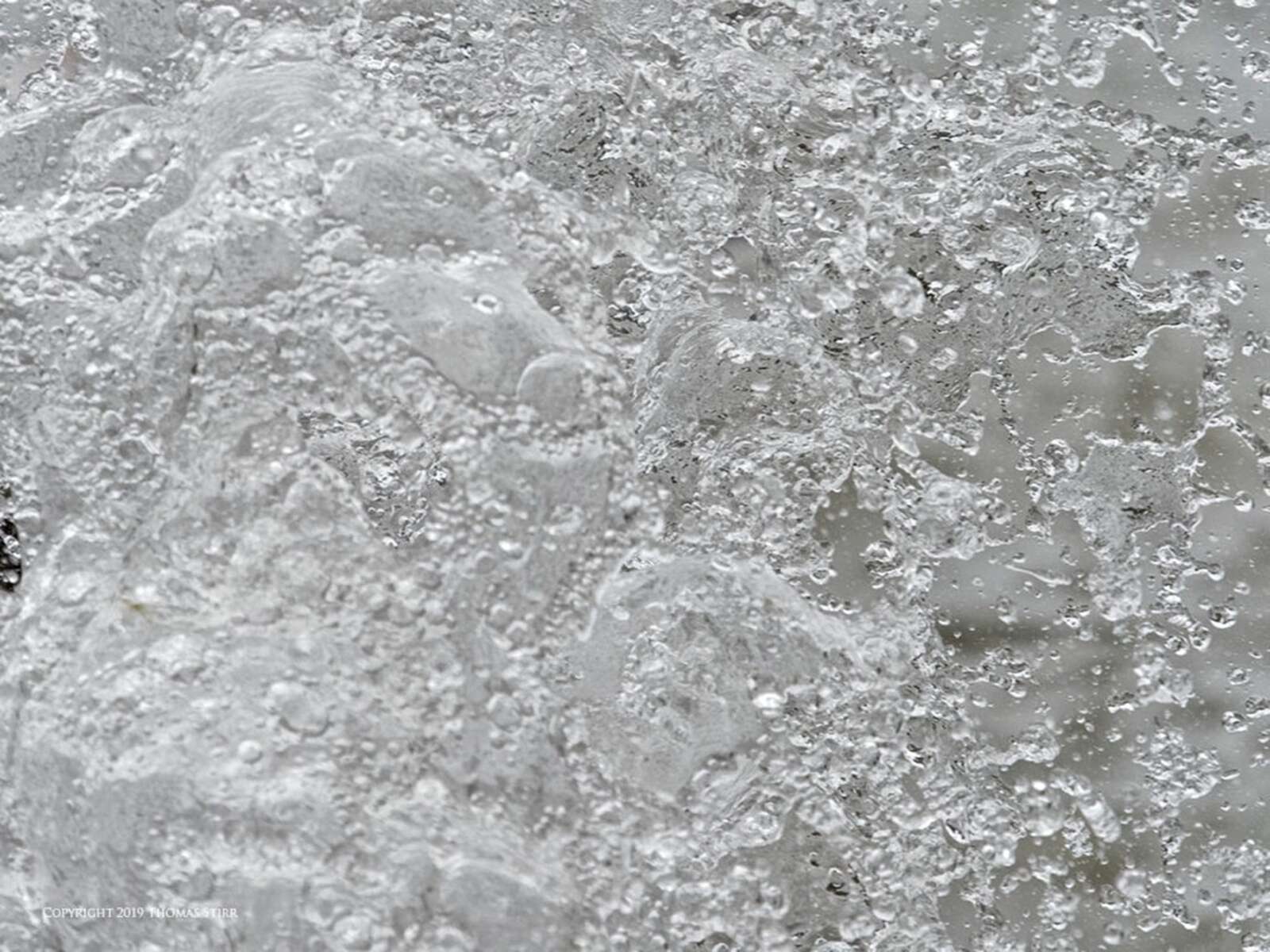
This image of a huge splash about to drench me and my OM-D E-M1X, M.Zuiko PRO 40-150 f/2.8 zoom and MC-20 teleconverter may seem like an odd image to feature in this User Spotlight Newsletter. During one of my initial test sessions after first purchasing some Olympus gear, I was out along the shoreline of Lake Ontario in extremely windy weather doing some test images of ducks and gulls flying past my location.
Since I was concentrating on the birds-in-flight while looking through my EVF, I had no idea that some large waves had broken on the rock retaining wall about 3 meters in front of me. As I captured this image all I could see was what seemed to be a wall of water about to descend upon me and my Olympus camera gear. All I had time to do was tuck my head down and point my camera gear towards the ground before the water hit me. Suffice to say that my camera gear and I were thoroughly soaked. There weren’t any water droplets on the filter on the front of my lens… so I just kept on shooting. This was the first time that I fully appreciated the incredible weather sealing of my Olympus/OM equipment.
Since this event happened, I’ve been out numerous times when inclement weather has chased other photographers to take cover… while I just kept on shooting.

While at Grindstone Creek in Burlington I noticed this small bird running along the top of a wire mesh fence. I quickly moved a few meters out in front of the bird and started spooling images into temporary memory using Pro Capture H and a single small auto-focus point that I placed at the top of the mesh. As I was spooling at 60 frames-per-second I waited for this small bird to run through my composition. Just as it was about to exit my frame, I fully depressed my shutter release and wrote 15 images that had been spooling in temporary memory onto my memory card. One of those images was this one with both of the bird’s legs in mid- air.
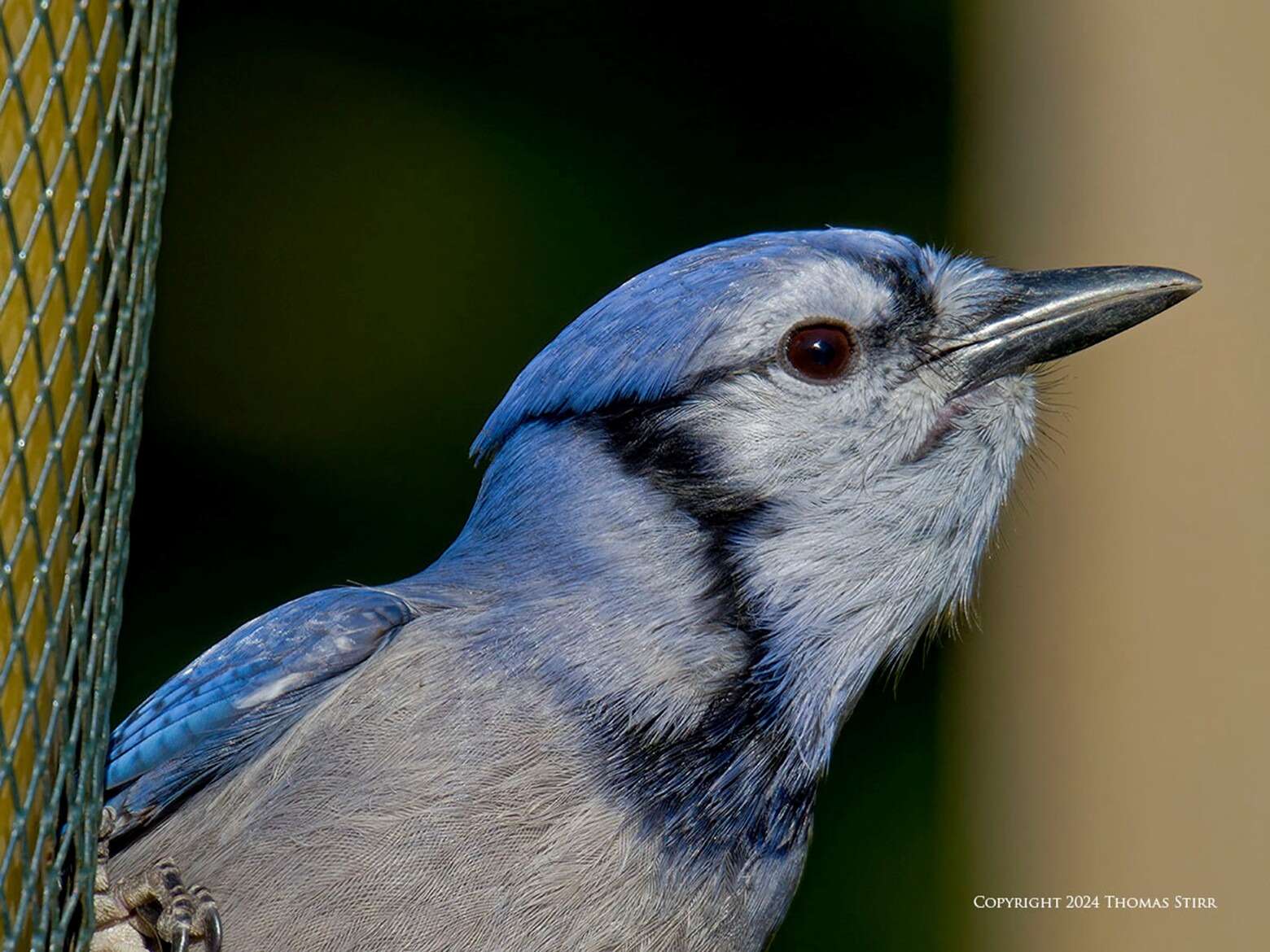
As noted earlier in this User Spotlight Newsletter article, I am very much an experimental and experiential photographer. I love to push myself and my camera gear just to see what is possible. This full frame capture of a blue jay at a bird feeder was captured in my backyard using the M.Zuiko 150-600 mm f/5-6.3 IS zoom lens fitted with an M.Zuiko MC-20 teleconverter. This combination produced a focal length of 1200 mm, or an equivalent field-of-view of 2400 mm. The image was captured using a shutter speed of 1/1000 and an aperture of f/13, at ISO-1250. Although this isn’t a focal length that I use on a regular basis, knowing that it could produce some useable images has come in handy a number of times when photographing perched birds. This image was captured at a subject distance of 8.3 meters.
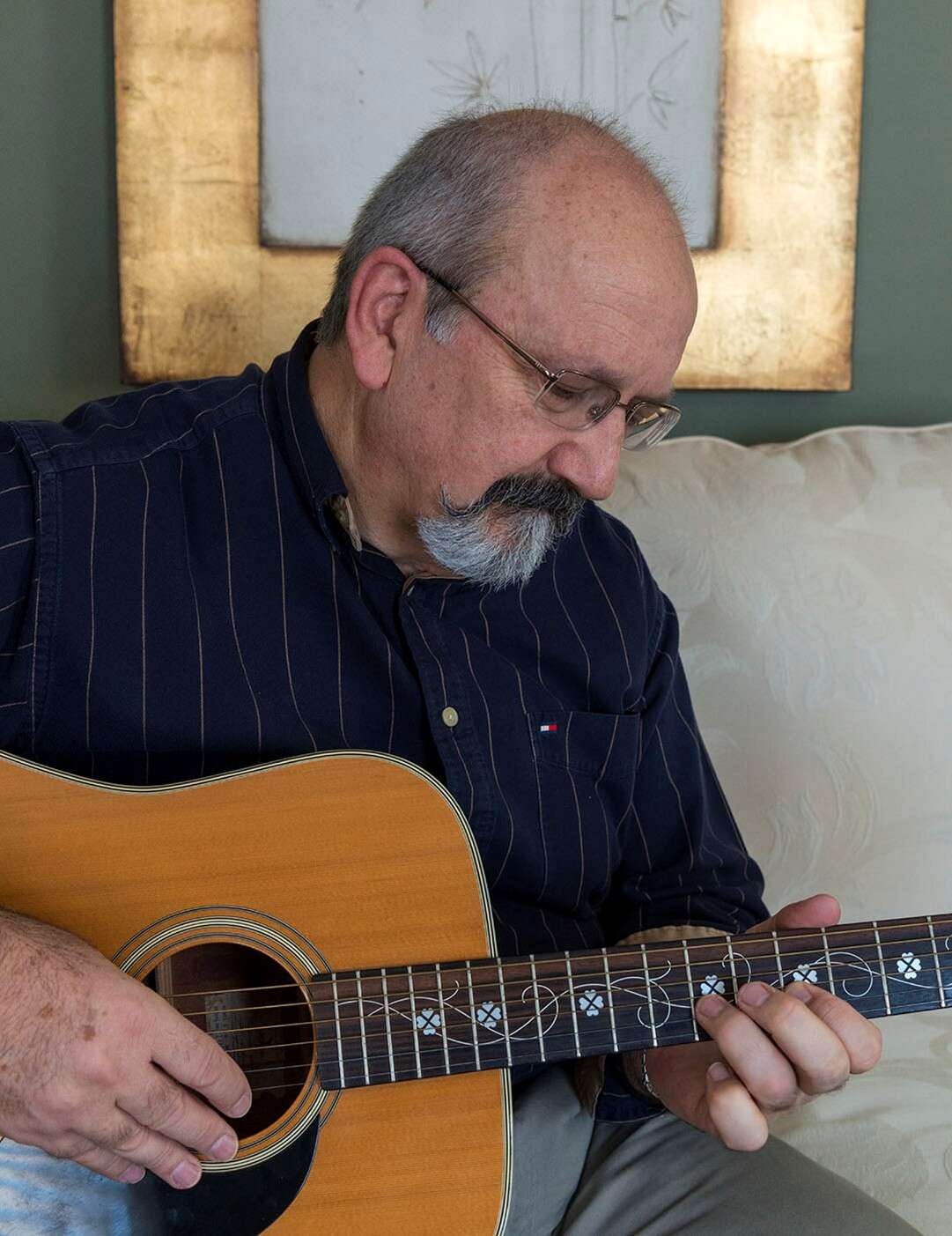
About Thomas Stirr
Thomas’s photography journey began more than 5 decades ago when he purchased his first interchangeable lens film camera as part of his job requirements at a community newspaper.
He has owned and used a variety of digital camera equipment including full frame, APS-C, 1-inch sensor, M4/3, and some point and shoot zoom units. Since mid-2019 Thomas has been using Olympus/OM System M4/3 camera gear exclusively. In the spring of 2020 Olympus North America named Thomas a ‘Featured Pro’ and profiled his work on their corporate website.
Before launching his own photography website in January 2015, Thomas wrote over 160 photography articles that appeared on leading photography websites such as Photography Life, Mirrorless Comparisons and others. Over the past eleven years Thomas has created and published over 1,500 articles on his photography website, and has shared more than 16,000 of his original photographs with his readers.
Thomas has authored 10 photography related eBooks which have been purchased by readers in more than 30 countries around the world. He currently has several additional photography eBooks under development.
Thomas’s client work focused on industrial photography and safety videos. He also created and produced a custom line of over 150 business-related posters covering safety, environmental, and anti-bullying themes. Thomas withdrew from his client business several years ago so he could focus his time and creative energies on his photography website and eBooks. He also dedicates some time doing presentations for camera clubs.